2026
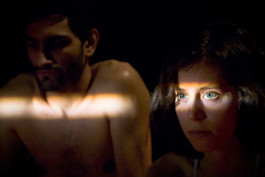
Video: Robin Elias Nidecker / Ton: Ralf Holtmann
© Lucia Luca Hunziker
© Lucia Luca Hunziker
© Lucia Luca Hunziker
© Lucia Luca Hunziker
© Lucia Luca Hunziker
© Lucia Luca Hunziker
© Lucia Luca Hunziker
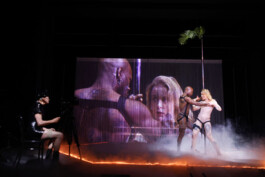
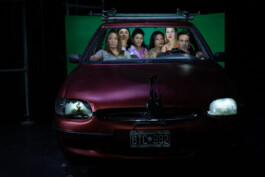
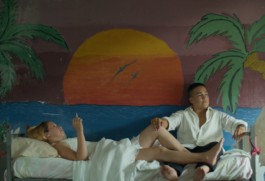
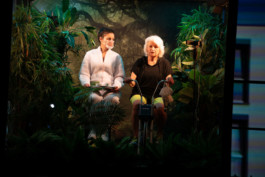
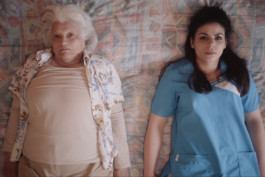
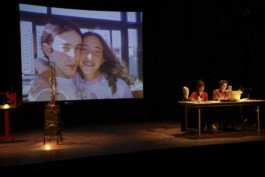
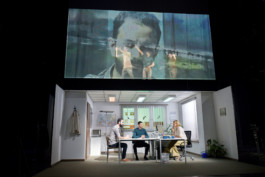
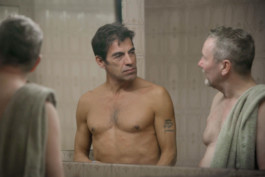
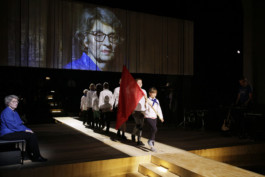
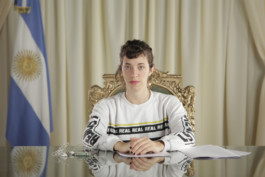
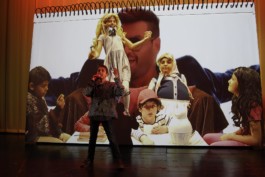
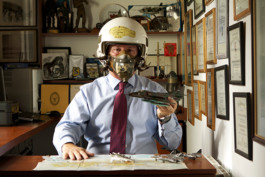
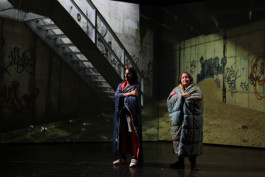
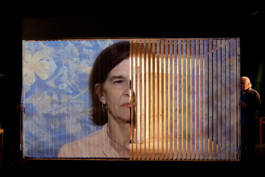
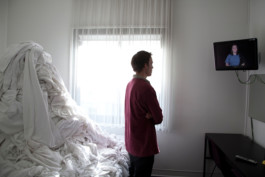
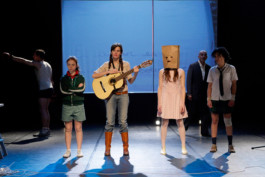
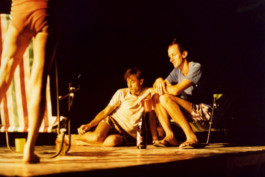
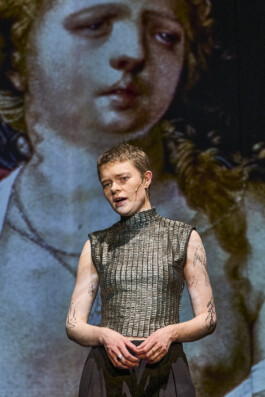
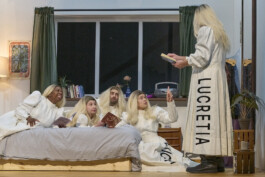
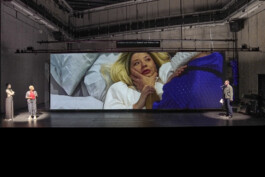
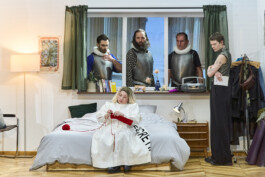
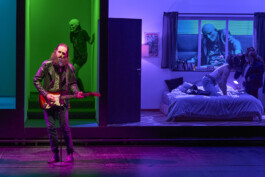
A group of actors and a writer attempt to stage Shakespeare's poem The Rape of Lucrece. They audition for all the roles, dissect the text, enact the situations, and connect with their own experiences. And between scenes, they sing and play in a band that transforms all the rage and pain into music.
They became the investigators of a case that still today defines how we think about rape. As the play unfolds, It is becoming increasingly unclear where the role ends and the person begins, when the poem becomes a situation in real life, and what our role is as witnesses or accomplices.
Sexual violence is everywhere, and it is political. Countless stories, songs, films, images of assault shape our culture. Director Lola Arias bases her play on research and conversations with victims of violence, artists and philosophers. What representations do we have in our mind when we say the word rape? How much silence, fear and shame do we still carry with us? How sexual violence is inscribed in our bodies and in society?
The rape of Lucrece is a project by Lola Arias in collaboration with Theater Basel and Lola Arias Company.CREDITS

Ntando Cele
Barbara Colceriu
Phil Hayes
Laura Leupi
Julian Anatol Schneider
Live Music Elia Rediger, Joel Fonsegrive
DIRECTION & TEXT Lola Arias
DRAMATURGY Bibiana Mendes
STAGE Dominic Huber
COSTUMES Tutia Schaad
SOUND DESIGN Elia Rediger, Joel Fonsegrive
VIDEO Mikko Gaestel
LIGHTING DESING Mario Bubic
PRODUCTION Jennifer Muangsiri
PRODUCTION | Lola Arias Company Laura Nicolas
ASSISTANT DIRECTOR Nima Aron Zarnegin, Julia Hasse
EVENING MANAGEMENT Nima Aron Zarnegin
STAGE DESIGN ASSISTANT Kim Surkus
COSTUME ASSISTANT Charlotte Christen
ASSISTANT DRAMATURGY Jacob Bührle
STAGE MANAGEMENT David Böse
STAGE MANAGEMENT INTERN Lenny Braunschweig
COSTUME ASSISTANT INTERN Aurelie Cuenot
SURTITLING Tim Vaterlaus
SOUND Arev Immer, Ralf Holtmann, Christof Stürchler
TOUR
2026
JUNE: 3, 6, 9 & 13
MAY: 13, 20 & 28
APRIL: 1 & 24
MARCH: 17, 20 & 26
Theater Basel, Basel, Switzerland
WORLD PREMIERE: 14 March 2026, Theater Basel, Basel, Switzerland
CONTACT
contact@lolaarias.com
DIRECTOR'S NOTE
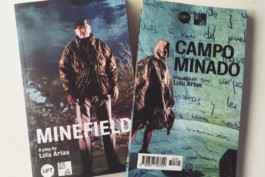
There are ideas that haunt us for years until we finally decide to confront them. In 2016, when I was rehearsing Campo Minado, the play about the Falklands War, we were improvising about the reasons why they had joined the army when one of the veterans recounted an episode of sexual abuse he had suffered as a child. Talking about the war had led him to share something he had never told anyone before: one wound opened another. That story was not part of the play, but it stayed with me. Later, while rehearsing other plays and also in my private life, several people told me stories of sexual abuse in prison, in the family, at work. All these stories came to me without my seeking them out, as if this violence were in the air, in very different contexts but very close to me. In reality, these are stories that are very close to all of us. If we don't see them, it's because they are clouded by pain, shame, and silence.
When the Theater Basel called me to do a play, we had many conversations about possible projects until something crystallized. I had been reading Mithu Sanyal's book Rape, which led me to read Shakespeare's poem “The Rape of Lucrece.” Everything began to take shape little by little, intuitively and a bit randomly, as is often the case with me. I knew I wanted to do a play about a group of artists who try to stage Shakespeare's poem and end up talking about their own stories of sexual violence, how other people's stories affect them, and how they imagine themselves in the roles of the poem.
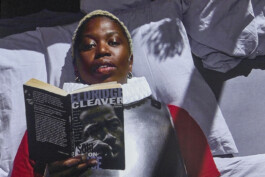
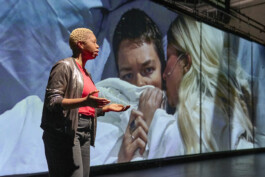
Finding the protagonists was not easy. The play was not an adaptation of a fiction with characters but rather a documentary experiment based on a poem. Some actors heard the word “rape” and took a step back. Others thought about the uncertain research they would be exposed to and preferred not to take the risk. We then decided to hold an open call, interviewed several people, and held some workshops. Finally, a group of people who had never worked together before came together: artist Ntando Celle, artist Phil Hayes, writer Laura Leupi, ensemble actors Barbara Colcerieu and Julian Anatol Schneider, and musicians Elias Reidiguer and Joel Fonsegrive. Together with them and the entire artistic team, we took a leap of faith.

During the months of rehearsals, we explored not only the verses of the poem but also the relationship that each of us could establish with it and its characters. Stories emerged that I didn't even know about. It was as if the poem was pushing us into an unknown place within ourselves and precipitating connections. We read and reread , trying to understand each of its phrases, act it out, sing it, put it on stage: the performers transformed themselves into Lucretias and Tarquinius with dresses and fake armor. At times, we laughed at the absurd attempts to represent Shakespeare's verses, and an hour later, we cried as we listened to our stories. At times, we felt very tired, as if we were carrying a heavy weight on our shoulders. All the stories of all the Lucretias and Tarquinius haunted us like ghosts. We traveled deep within ourselves and our history.
We had meetings with Opfer Hilfe in which we tied ourselves together with balls of wool and gathered small precious stones to accompany us on our journey. We sang songs of love and violence until we were exhausted. We talked until we no longer knew what we were talking about, and little by little we gave shape to the play.
The Rape of Lucrece, a Casting is an essay on the representation of the impossible. By exhuming, interpreting, and discussing Shakespeare's poem, the performers do much more than revive a classic of literary tradition: they reopen a case from the past, unfold it in all its facets, and throw it onto the stage of the present, where its political implications resonate as never before.
Lola Arias